







Black rings around nail holes, and why sanding will not lift them
Iron and tannin react in old native timber. The stain goes deeper than a sander can safely reach.
Sand an old rimu floor and you will often find a dark halo around each nail. It looks like dirt. It is a chemical reaction, and it does not come out with abrasive.
What causes it
Native timbers contain tannins. Iron nails corrode slowly in the presence of moisture. The iron and the tannin react and produce a dark compound that migrates into the timber around the fixing, in the same way that iron gall ink works.
The staining follows the moisture, so it goes deep. A millimetre or two of sanding takes off the top of it and reveals more underneath.
Why we will not chase it
Removing the stain entirely would mean sanding several millimetres off the whole floor to keep it level, and most old floors do not have that to give. Spending three sands worth of thickness to remove some dark spots is a poor trade on a floor that has two or three sands left in it.
Spot sanding around each nail produces a dish in the floor at every fixing, which shows under the finish worse than the stain did.
What can be done
Oxalic acid will lift iron staining, and on a small number of prominent marks it is worth doing. It is applied to the spot, left to work, then neutralised and rinsed, and the treated area needs to dry fully before the floor is coated. On a floor with a thousand marked nails this is not a practical answer, and the treated spots can come up lighter than the surrounding timber, trading a dark mark for a pale one.
Board replacement removes the problem where a few boards carry most of the damage.
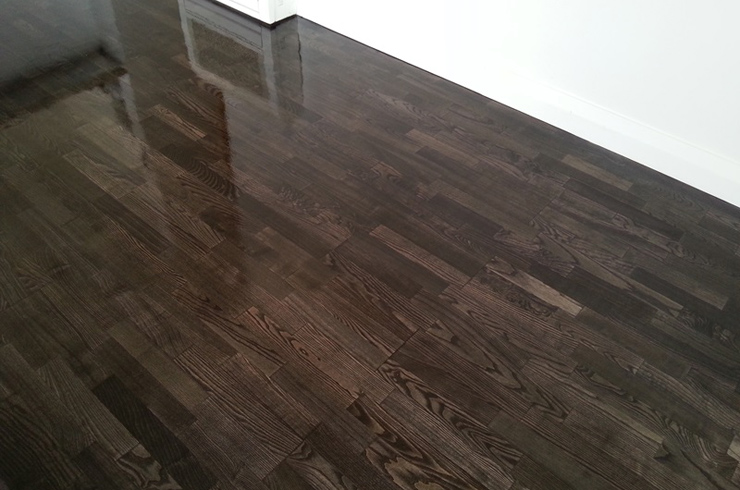
Staining the floor darker is the most common answer on a heavily marked floor. A mid to dark stain does not remove the rings but it compresses the contrast, so they stop reading as spots and start reading as part of the grain. On a villa floor with marks the length of every joist line, this often produces the best looking result for the least money.
Deciding when you can see it
The marks are invisible under carpet and only appear once the floor is sanded, so this is a decision you make partway through the job rather than at quote stage.
We will stop after the sanding is done and walk it with you in daylight. Plenty of people look at a floor they were braced to be disappointed by and decide the marks are part of what a hundred year old floor looks like. Others want the stain. Either is a reasonable call, and it costs nothing to make it at that point rather than guessing beforehand.
What we will not do is coat it without showing you first.