






Borer in Wellington floors, and what it means for a sand
Old flight holes are common and mostly harmless. Frass, soft timber and structural loss are a different conversation.
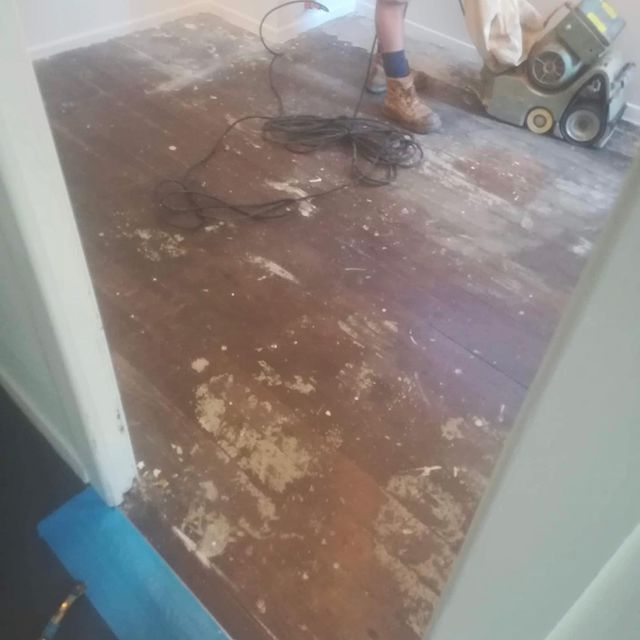
Pull the carpet off a Wellington villa floor and you will often find small round holes scattered through the boards, particularly in rimu. Common house borer has been in New Zealand timber for a long time and most old floors carry some evidence of it.
The question is whether the infestation is historic or live, and whether the timber has lost strength.
Reading the holes
Flight holes are about 1.5mm across, round, and made by the adult beetle leaving the timber. A hole on its own tells you a beetle emerged at some point, not that anything is happening now.
Look for frass, a fine powder like talc, sitting in or below the holes or on the ground under the subfloor. Fresh frass is pale and loose. Old holes are grey inside and empty, and the timber around them is as hard as the rest.
Live infestation means fresh frass, holes with clean bright edges, and often a concentration in one area rather than an even scatter.
What a sand does and does not do
Sanding takes off a millimetre or two. It removes the top of shallow holes and makes the surface look better, and the finish coat fills the remainder so a lightly affected floor comes up perfectly acceptable.
Sanding does nothing to live borer. Beetles are in the timber, not on it, and taking the surface off does not reach them. Coating the floor does slow reinfestation, because the adults prefer bare timber to lay in, but that is a side effect rather than a treatment.
If the borer is live, treatment comes first and it is a job for a pest control operator, not a floor sander. We would rather delay a job than sand and coat a floor that is being eaten underneath.
When the timber has gone
Push a screwdriver into a suspect board in an inconspicuous spot. Sound timber resists. Timber that has been hollowed gives way and crumbles, and you will get powder rather than a shaving.
Where a board has lost structure, replacing it is the answer. On a floor where the damage is scattered through a room rather than confined to a few boards, replacement of the affected area starts to approach the cost of a new floor, and that changes the recommendation.
The joists and the subfloor matter more than the boards. Borer in a joist is a building problem and needs a builder. We will tell you if we see it, but assessing structure is outside what a flooring contractor should be signing off.
Wellington specifics
Damp, poorly ventilated subfloors give borer the conditions it likes. Plenty of Wellington houses sit on a hill site with the ground close under the floor at the back and no vapour barrier down.
Sorting the subfloor ventilation and putting a barrier over exposed ground does more for the long term condition of your floor than anything we do on top of it. If we look under your house and find damp ground and blocked vents, we will say so.