






Nail punching, and what happens when it gets skipped
A proud nail head tears an abrasive belt and rips a line the length of the room. Punching them is half an hour that saves a day.
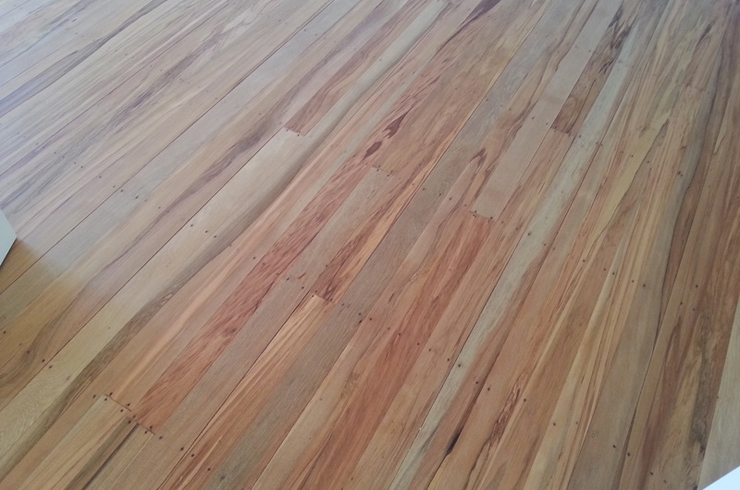
Before any abrasive touches an old floor, somebody goes over it with a nail punch and a hammer and drives every proud fixing below the surface. On a Wellington villa that is a couple of thousand nails and most of a morning.
What a proud nail does
Floor nails work up over decades as the timber moves. You will not see them, and you often cannot feel them underfoot through carpet, but a head sitting even half a millimetre above the boards will catch the abrasive.
At that point one of two things happens. The belt tears, which costs a belt and ten minutes. Or the belt survives and the nail head gouges a line down the floor for as far as the machine travels, which costs considerably more because the only fix is going back to a coarse grit over the whole area.
Why it cannot be done by feel
Running a hand over the floor finds the worst of them and misses plenty. The reliable method is going over the whole surface systematically with a punch, hitting every fixing whether it feels proud or not. In a hallway where the nails sit in two neat rows it goes quickly. In a room where boards have been lifted for plumbing and renailed at random, it does not.
We also pull anything that is not a floor nail. Tacks left from carpet underlay, staples from a previous vinyl, the odd screw somebody put in to stop a squeak, and gripper strip nails around the perimeter all have to come out before the machine runs.
The holes it leaves
Punching a nail leaves a small recess, and on an old floor those recesses often have a black ring around them where water has reacted with the iron over the years. The recess itself gets filled at the fill and prep stage. The black ring frequently does not come out.
That staining sits deeper than the millimetre or so a sand can safely remove. On a floor with a lot of it, the options are accepting it as part of the character of an old villa, replacing the worst boards, or staining the floor darker so the marks stop reading as marks. We will tell you which of those we think is worth doing when we quote.
What you can do before we arrive
If you have lifted the carpet yourself, get the gripper strips and the underlay staples out rather than leaving them for us. The strips come up with a bolster and a hammer, and the nails left behind pull with pincers. It is a tedious job and doing it yourself takes it off the quote.
Leave the floor nails alone. Punching those is a job with a specific tool and a knack, and a hammer used directly on a floor nail bruises the timber around it in a way that shows through the finish.