







Should you sand your floor or replace it?
How to tell whether the timber under your carpet has another sand left in it, and what makes us say no.
Start with the thickness above the tongue
A solid timber floor takes three to five full sands over its life. Each one removes one to two millimetres. What matters is not how many sands it has had, which nobody knows, but how much timber is left above the tongue.
Lift a board at a vent or a hearth and measure. Above about three millimetres you have another sand. At three millimetres you have one careful one. Below that, sanding exposes the tongue and the nails, and the floor is finished.
Grey is not damage
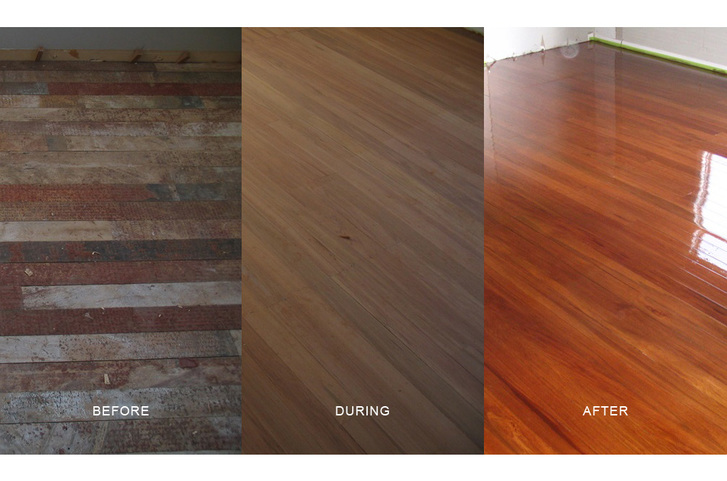
The grey surface under a carpet is oxidised timber about half a millimetre deep. It sands off with the first pass. So do tack holes at the perimeter, staple marks, scuffs and most surface water staining.
What does not sand off is a deep knife cut from a carpet layer’s trimmer, a stain that has soaked into the fibre, urine, and the black rings around nail heads. Those boards get replaced, or the floor gets stained darker to even it out.
The four reasons we say no
- Borer through the tongues. The board looks sound on the face and is hollow where it matters.
- Rot. Usually a shower or a laundry that leaked for a decade.
- No thickness left. Three sands already behind it.
- It is not timber. Particle board is a substrate, not a floor, and a lot of Whitby and Churton Park housing sits on it.
What to tell us
Ring Paul with your suburb, the approximate floor area and what the worst patch is doing. That is enough for a straight answer about which way your floor is likely to go, before he comes out to measure it properly.