






Water based or solvent polyurethane in a house you live in
The two systems differ in colour, smell, downtime and how they age. One of those matters more than the others if you are staying put.
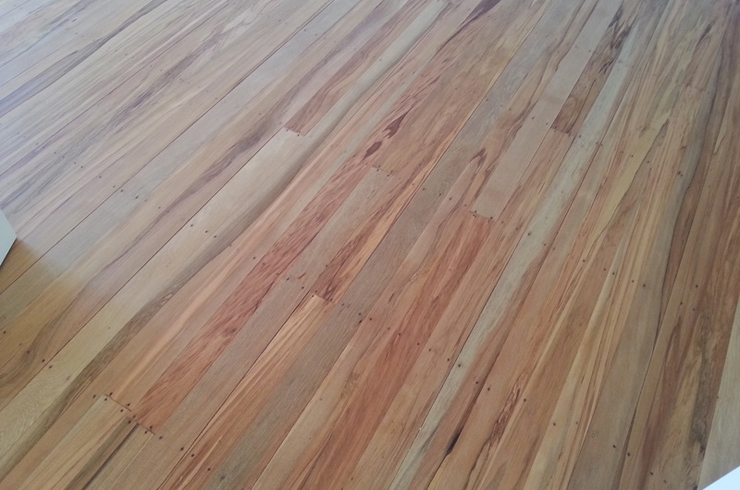
Both systems produce a hard film that carries the wear instead of the timber. The differences show up in colour, in how long your house is unusable, and in what the floor looks like in five years.
Colour
Solvent based polyurethane goes on with a warm amber cast and continues to amber as it ages. On a rimu or matai floor plenty of people like that, because it deepens the natural colour and reads as traditional.
Water based systems are close to clear and stay close to clear. A floor coated in water based finish looks much more like bare sanded timber, which suits a pale oak and suits anyone who does not want their floor going golden over time.
Neither is correct. The relevant question is whether you want the floor to look like the timber does now or a shade warmer.
Ambering is uneven
The catch with solvent is that ambering tracks light exposure. Sun through a big window ambers that part of the floor faster than the corner behind the sofa, so the floor develops a gradient. Lift a rug after two summers and there is a pale rectangle.
In a room with a lot of direct sun this is the deciding factor, and it is why we specify water based as standard on north and west facing rooms and on coastal jobs.
Smell and downtime
Solvent finishes are strong. The smell fills the house, lingers for several days, and anyone with asthma or a respiratory condition should be out of the building. Recoat times are longer, so the job runs longer.
Water based Synteko Nova Best XC is low odour and low VOC. The smell is noticeable on the day and largely gone within about a day. Because it recoats faster, two coats can go down in a day in reasonable conditions.
For an occupied house, or a rental between tenants, or anywhere with a short window, that difference in downtime is usually what decides it.
Hardness
Older water based products had a reputation for being softer than solvent. Current two component systems do not. Synteko Nova Best XC is rated for high traffic commercial use and holds up in a busy hallway as well as anything solvent based.
Where solvent still has an argument is on a floor that will not be maintained, because the thicker build of some solvent systems tolerates neglect. If you are the sort of household that will book a maintenance coat when the traffic lanes start to dull, that advantage disappears.
Sheen
Both come in a range from matte through satin to gloss. Gloss shows every scratch, every speck of grit and every footprint, and on an old floor with an uneven surface it exaggerates the unevenness. Satin is the usual choice. Extra natural matte gives close to a bare timber look while still being a film finish.
What we recommend
For most Wellington houses: water based, satin, three coats on a resand. It gives you a floor the colour of your own timber, a house you can use again quickly, and a finish that will not go yellow where the sun hits.
If you specifically want the warm amber of a traditional villa floor and you can vacate the house for a week, solvent is a legitimate choice and we will apply it. Say so at quote stage, because it changes the schedule as well as the price.