


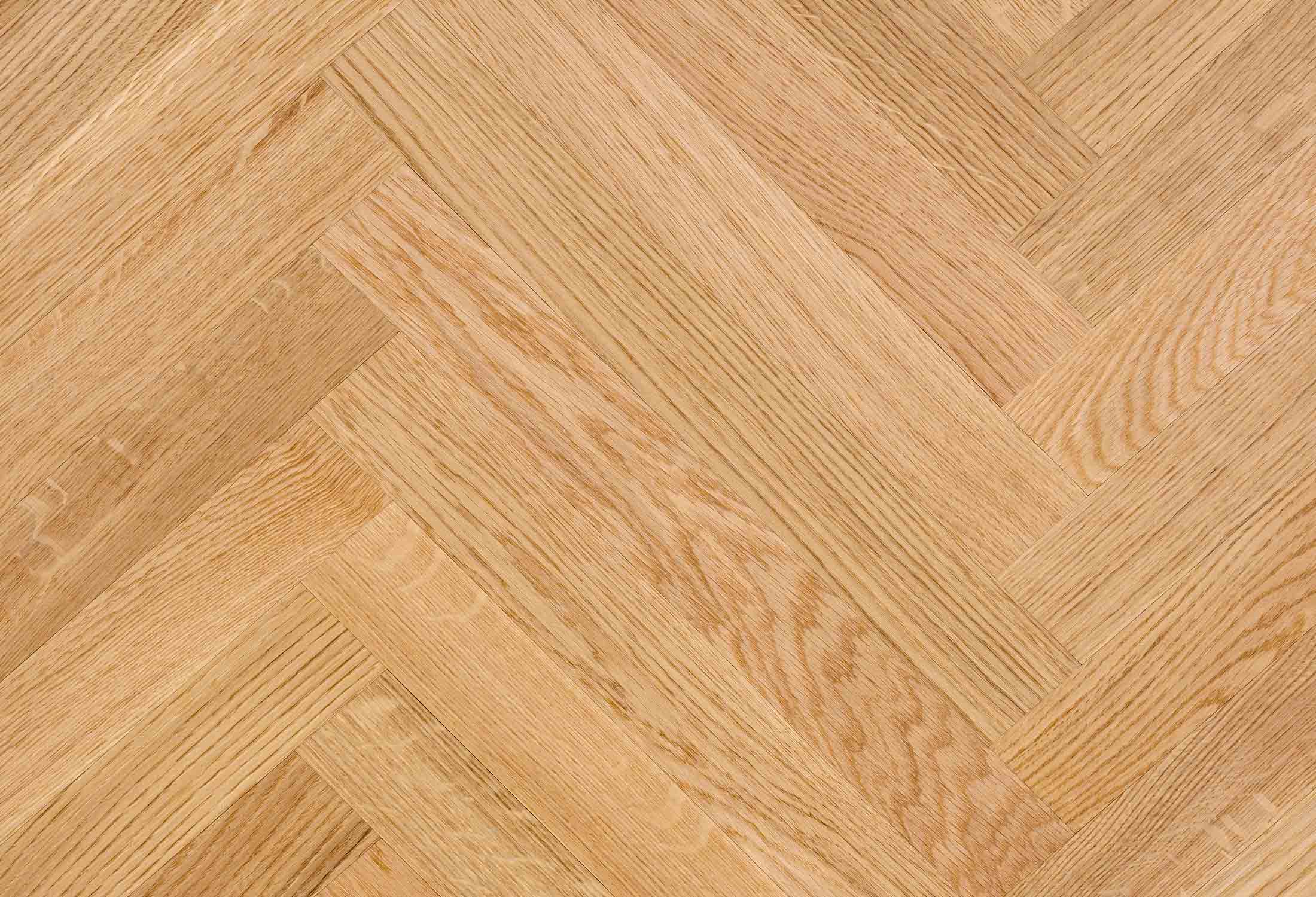





Why parquet and herringbone cost what they do
The material is a fraction of it. The labour is in the setting out and the number of joints.
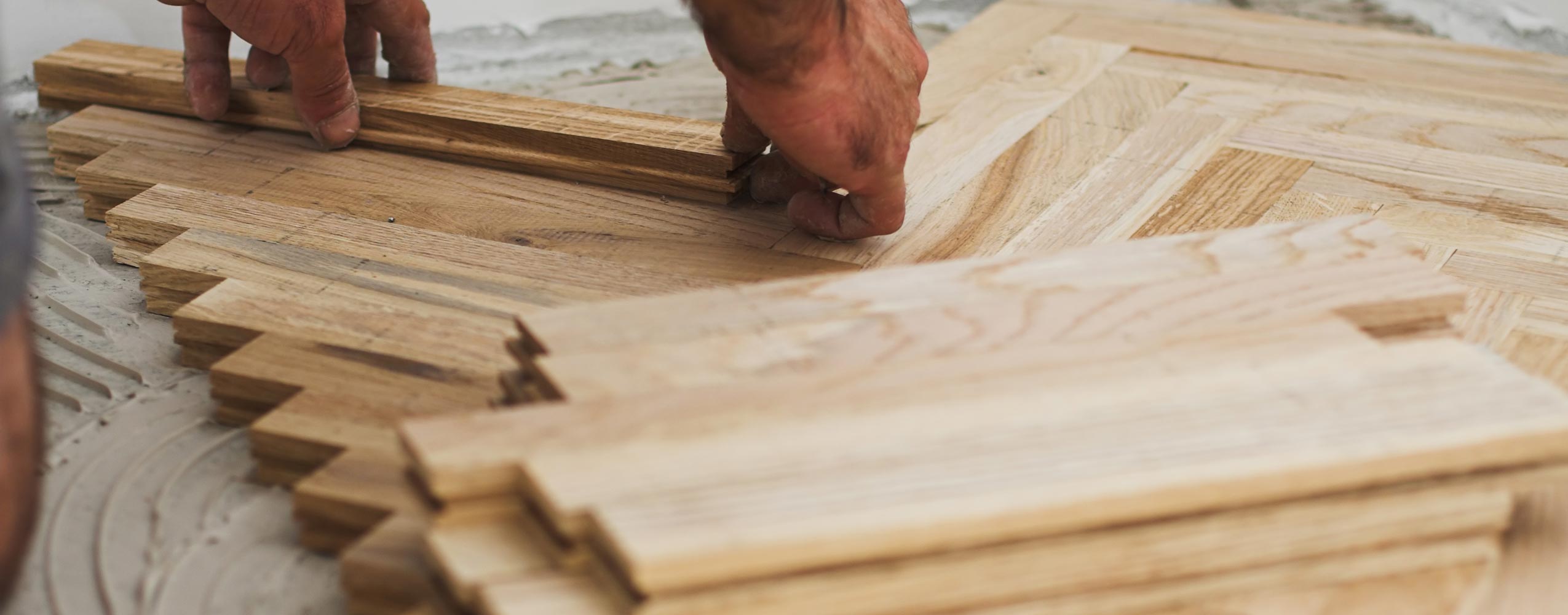
A herringbone or parquet floor costs several times what the same area in straight boards costs, and the difference is almost entirely labour.
The number of pieces
A square metre of 180mm straight boards is a handful of pieces and a few metres of joint. The same square metre in herringbone blocks is dozens of pieces and a great deal more joint, and every one of those joints has to be tight and in the right place.
Each block is cut, fitted and set. Multiply that across a room.
Setting out decides everything
A herringbone floor is laid from a centre line established across the room, and every subsequent block references that line. A setting out that is a degree off at the start becomes visibly wrong by the far wall, and there is no correcting it partway.
Getting the centre line right in a villa where no two walls are parallel and no corner is square takes time before a single block goes down. On an irregular room the setting out can take longer than a day of laying.
The perimeter
The pattern runs into the walls at an angle, so every block around the edge of the room needs cutting to fit. A border, which most parquet floors have, means a straight run around the perimeter with mitred corners and a cut line where the pattern meets it.
That border is where a good job separates itself from a poor one, and it is slow.
Sanding a pattern is different too
Grain in a herringbone floor runs in two directions at ninety degrees. A drum sander cutting with the grain on one block is cutting across it on the next.
The answer is sanding diagonally to the pattern, at forty five degrees to both directions, then working through the grits with progressively lighter passes. It takes longer than a straight board floor of the same area and needs a more careful operator, because tear out on cross grain shows badly under a coat.
Relaying an existing parquet
Old parquet floors in Wellington were often laid in bitumen directly onto concrete or onto a timber subfloor. Blocks lift over time as the adhesive fails.
Relaying loose blocks is possible where they are intact and the adhesive residue can be cleaned off the back. It is fiddly work and priced by the hour rather than the metre, because how bad it is only becomes clear once you start.
Where blocks are broken or missing, sourcing matching secondhand parquet is the constraint. Old parquet in the right timber and the right size turns up, but not to order.
Worth asking about
If you like the look and the budget will not reach a full herringbone floor, a straight board floor with a herringbone panel in an entry or a bay gives you the effect for a fraction of the labour. It is a common compromise and it works well.