Floor Polishing vs. Floor Coating: Which Service Does Your Timber Floor Actually Need?
Many homeowners confuse floor polishing with floor coating, but these are two very different services that deliver distinct results. Understanding which treatment your timber floor needs can save you time, money, and disappointment. This expert comparison breaks down the differences between polishing and coating, helping you make the most informed decision for your floors.
After 30+ years of Wellington flooring projects, we’ve lost count of how many times a homeowner has called us up saying “I just need a quick polish” when really their floor is crying out for a full sand and refinish. It’s an easy mix-up to make. The terms get thrown around interchangeably in home reno Facebook groups, by well-meaning mates, and even by some flooring companies who should know better. But if you’ve got a heritage villa in Thorndon with tired old rimu floors, or a Petone cottage with boards that haven’t seen any love since the Muldoon era, knowing the difference between polishing and coating is going to save you a world of pain (and cash).
So let’s clear this up once and for all, Wellington style, no jargon, no fluff, just the straight goods from a crew who’s walked into hundreds of local homes and worked out exactly what their floors needed.
Why This Confusion Costs Wellington Homeowners Time and Money
We get it. Flooring decisions feel overwhelming when you’re renovating. You’re already juggling a dozen other decisions (paint colours, kitchen benchtops, whether your builder is ever going to call you back), and then someone mentions “floor coating” and you nod along like you understand, when really you’re just hoping your old timber floors will look new again without costing a fortune.
Here’s the problem: if you ask for the wrong service, you either:
- Pay for a treatment that doesn’t actually fix the issue your floor has (and have to pay again later to do it properly)
- End up with a finish that doesn’t suit your home’s style or how hard your floor gets used
- Miss out on the chance to really transform the space because you went for a “quick fix” when your floor needed a proper refresh
We’ve seen it happen. A homeowner in Karori once called us after a “quick polish” from another company left her floor looking the same as before, because the floor actually needed sanding back first to deal with old scratches and a worn-out finish. Polishing over a tired, damaged surface is like putting a fresh coat of lipstick on, well, you get the idea. It doesn’t fix what’s underneath.
What Is Floor Polishing, Really?
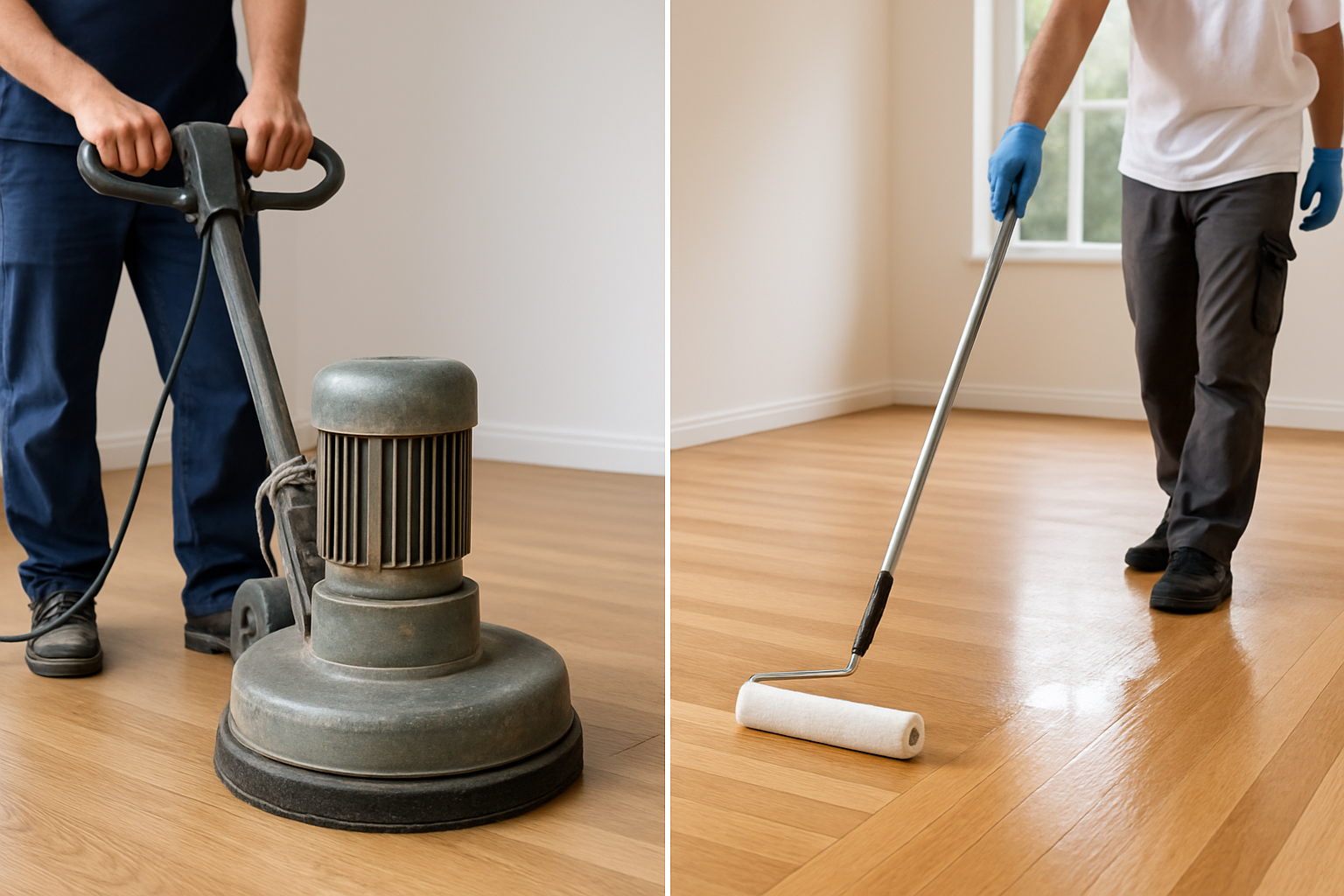
Let’s start with the basics. Floor polishing is all about restoring the shine and protecting the life of your existing timber floors. Think of it as giving your floors a refresh rather than a full makeover. At 4 Star Flooring, our floor polishing service is designed to bring back that natural lustre and extend the life of timber floors that are still in reasonably good condition.
Polishing works brilliantly when:
- Your timber floor has lost its shine but doesn’t have deep scratches, gouges, or major wear patterns
- You want to protect your floors from everyday foot traffic, pets, and the usual chaos of family life
- Your existing finish just needs a boost, not a complete strip-back
- You’re after a quicker, more affordable way to make your floors look loved again
Pro tip: If your floor still has its original finish intact and just looks a bit dull or tired, polishing is often all you need. Save your money for the areas of your reno that actually need a bigger investment.
What Floor Polishing Won’t Fix
Now here’s where we need to be honest with you, because that’s how we’ve built our reputation across Wellington. Polishing is not a magic fix for every timber floor problem. If your floors have:
- Deep scratches or gouges from furniture, pets, or dropped items
- Water damage or staining that’s gone into the timber itself
- Patches where the old finish has worn completely through
- Boards that are cupping, warping, or visibly uneven
…then polishing alone isn’t going to cut it. These are signs your floor needs a more thorough approach, which usually means sanding before any kind of refinishing happens. We’ll talk about that shortly.
What Is Floor Coating? Understanding the Bigger Picture
“Floor coating” generally refers to the actual finish that gets applied to your timber floor, whether that’s a polyurethane coating, oil-based finish, or similar protective layer. This is different to the action of polishing. Coating is about applying (or reapplying) that protective layer to your timber, and it usually comes after sanding when your floor needs more than a surface-level refresh.
Here’s the thing Wellington homeowners are always surprised to learn: a full coating job typically follows floor sanding, not polishing. When your timber floor has had its old, worn finish completely removed through sanding, a fresh coating is what seals and protects the timber, giving you that beautiful, durable new-floor look.
If you’re staring at floorboards that have seen better days, with their finish patchy, discoloured, or completely worn away in high-traffic zones (like the hallway everyone walks through, or in front of the kitchen sink), you’re likely looking at a sand and coat situation rather than a simple polish.
The Real Difference: Maintenance vs. Restoration
Here’s the simplest way we explain it to Wellington homeowners who come to us scratching their heads over what their floor actually needs:
- Floor polishing = maintenance. It’s for floors that are still structurally and visually in decent shape but need their shine and protection topped up.
- Floor sanding and coating = restoration. It’s for floors that have significant wear, damage, or an old finish that’s beyond saving, and need to be stripped back to bare timber before a new protective coating goes on.
Think about it like your car. Polishing is like a good wash, wax, and detail. Sanding and coating is like respraying the panels because the paint’s peeling and there’s rust underneath. Both make your car look great, but they’re solving very different problems.
A Quick Self-Check for Your Wellington Home
Not sure which camp your floor falls into? Walk around your place and ask yourself:
- Does the floor still have a visible, even sheen across most of the room?
- Are there only minor surface marks, rather than deep gouges or bare patches?
- Has it been less than several years since your floor was last sanded and finished?
- Is the timber itself in good condition, without cupping, warping, or staining?
If you answered yes to most of these, polishing is probably your best bet. If you’re shaking your head at more than a couple of these, you’re likely in sand-and-coat territory.
Why Wellington’s Climate Makes This Decision Even More Important
Here’s something a lot of homeowners don’t think about until we point it out: Wellington’s climate is genuinely tough on timber floors. We’ve got that coastal moisture rolling in, big temperature swings between seasons, and plenty of older villas and cottages with underfloor spaces that let damp air creep up into your timber.
All of this means timber floors in Wellington homes, especially those heritage villas in Mount Victoria or character cottages around Petone, can wear differently to floors in drier, more stable climates. The finish can break down faster in rooms that get a lot of sun through north-facing windows, and moisture swings can affect how the timber itself behaves over time.
This is exactly why getting the right treatment matters so much here. A polish on a floor that actually needs sanding won’t hold up against our Wellington weather swings, and you’ll be back to square one within a year, frustrated and out of pocket.
When Floor Sanding Needs to Happen First
We mentioned it above, but it’s worth its own section because it trips up so many homeowners. Floor sanding is often the essential first step before any serious coating work can happen. If your timber floors have significant wear, old finishes that have broken down, or damage that’s more than surface deep, sanding strips everything back