
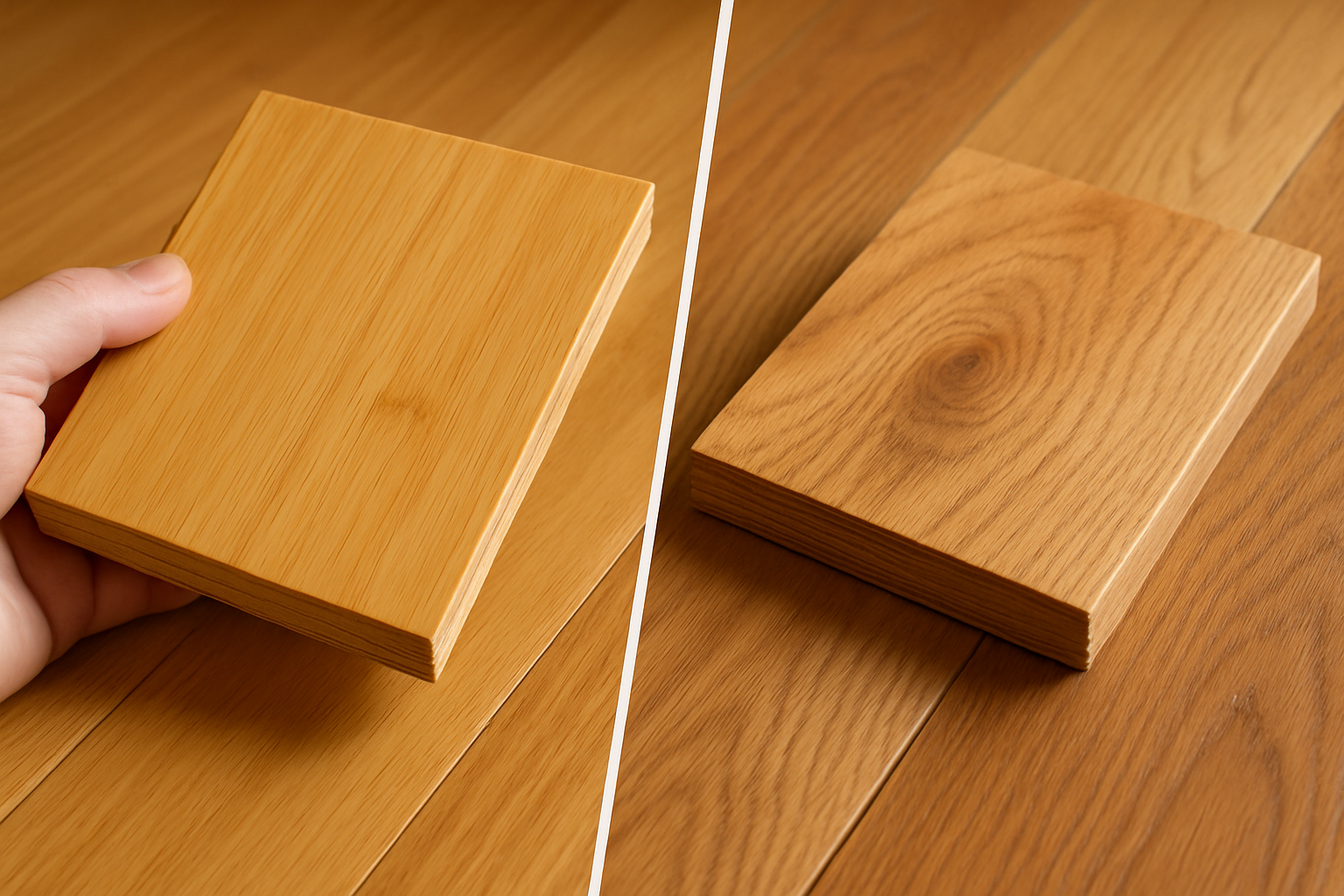
Bamboo Flooring vs Traditional Timber: Which Offers Better Durability?
Choosing between bamboo flooring and traditional timber for your home? This detailed comparison explores durability, sustainability, cost, and aesthetic appeal to help you make an informed decision. Discover why bamboo flooring continues to grow in popularity as a resilient, eco-conscious flooring solution.
If you’ve been standing in your lounge for the last three weekends trying to picture bamboo versus timber underfoot, you’re not alone. After 30+ years of Wellington flooring projects, we can tell you this is one of the most common questions that lands in our inbox and on our doorstep. Walking into a Wellington heritage villa with tired old floors is like seeing a classic car with rusty paint, you know there’s something incredible underneath, you just need the right team to bring it back. But for homeowners starting fresh or renovating from scratch, the bamboo versus timber question is where the real decision paralysis kicks in.
So let’s settle it properly. In this guide, we’re breaking down durability, sustainability, cost, and looks, using what we’ve learned from thousands of floors across Wellington homes, from character villas in Thorndon to modern builds out in Miramar. By the end, you’ll know exactly which option suits your home, your lifestyle, and your budget.
Why This Decision Feels So Overwhelming (And Why That’s Normal)
We get it, flooring decisions feel overwhelming when you’re renovating. You’re not just picking a material, you’re picking something that has to survive kids, pets, coastal moisture, dropped wine glasses, and probably a few Wellington southerlies rattling through the windows for the next few decades. On top of that, everyone online seems to have a strong opinion, and half of it contradicts the other half.
Here’s what we’ve learned transforms ordinary spaces into showstoppers: it’s not about which material is “best” in some abstract sense. It’s about which material is best for your home, your household, and your goals. A young family in Newtown with a dog and two toddlers has completely different flooring needs than a couple restoring a heritage villa in Mount Victoria who want to keep those original floorboards singing for another hundred years.
Let’s dig into the actual differences so you can stop second-guessing and start planning.
Durability Showdown: Bamboo Flooring vs Traditional Timber
This is the big one, so let’s not dance around it.
How Traditional Timber Holds Up
Timber flooring has been the backbone of Wellington homes for generations, and there’s a reason those beautiful old villas in Thorndon and Kelburn still have their original floorboards underneath the carpet someone laid in the 1970s. Solid timber is genuinely tough stuff. It can take decades of foot traffic, and here’s the real secret: unlike most flooring materials, timber can be brought back from the dead.
That’s the beauty of timber floor sanding and polishing. When timber gets scratched, dull, or worn down over the years, it doesn’t mean game over. A proper sand and polish strips back the tired surface layer and reveals fresh, vibrant timber underneath, ready for another few decades of life. We’ve walked into countless Wellington villas where the owners thought the floors were beyond saving, only to discover incredible timber hiding under decades of grime and old finish. That’s the kind of transformation that genuinely stops people in their tracks.
The trade-off? Timber is a natural product, which means it responds to moisture and temperature. Wellington’s coastal climate, with its humidity swings and those brisk changes between a sunny north-facing lounge and a chilly hallway, can cause timber to expand and contract over time. This is completely normal and manageable with the right installation and finish, but it’s worth knowing upfront.
How Bamboo Flooring Performs
Bamboo flooring has earned its reputation as a genuinely resilient option, and it’s easy to see why it keeps growing in popularity with Wellington homeowners. Bamboo is technically a grass, not a wood, and it grows incredibly fast, which gives it some unique properties when it’s processed into flooring. Quality bamboo flooring is dense and hard-wearing, standing up well to everyday knocks, furniture, and family life.
For busy households, home offices, or rental properties where low-fuss durability matters, bamboo flooring is an affordable alternative that holds its own against everyday wear and tear. It’s a great option if you want the warmth and natural look of timber-style flooring without constantly worrying about every little scuff.
The one thing to keep in mind is that bamboo, like timber, is still a natural material and needs to be treated with a bit of care around serious moisture. But for typical household durability, day-to-day living, and standing up to Wellington life, bamboo genuinely delivers.
So Which One Actually Wins?
Pro tip: If you love the idea of a floor you can restore and refresh again and again over 30, 50, even 80 years, solid timber is very hard to beat, especially when you’ve got access to expert timber floor sanding and polishing to bring it back to life every decade or so. If you want a hardy, affordable, low-maintenance option that still looks beautiful from day one, bamboo flooring is an excellent modern contender.
Honestly, it’s not a case of one being objectively “more durable” in every situation, it’s about which type of durability matters more to you: the renewability of timber, or the everyday resilience of bamboo.
Sustainability: The Eco Factor Wellington Homeowners Care About
More and more Wellington homeowners are asking us about sustainability, and it’s a fair question when you’re investing in something that’ll be underfoot for decades.
Bamboo is often celebrated for its fast growth cycle, which makes it a popular eco-conscious choice compared to some traditional hardwoods that take much longer to mature. If sustainability is high on your priority list, bamboo flooring is worth serious consideration.
That said, timber flooring has its own sustainability story, particularly when you’re restoring existing floorboards rather than replacing them entirely. There’s nothing more sustainable than working with what’s already in your home. Instead of ripping out old timber and sending it to landfill, a professional sand and polish gives your existing floors a whole new lease on life, no new materials required, no waste created. That’s the kind of sustainability win that also happens to save you money.
Transformation Magic: How Great Floors Change Everything About a Space
Here’s something we’ve seen play out again and again: the floor sets the tone for the entire room. You can have gorgeous furniture, perfect paint colours, and beautiful lighting, but if the floor underneath is tired, scratched, or mismatched, the whole space feels off.
We recently had a project in a character home where the owners were ready to rip out their original timber floors and replace them with something new, convinced the old boards were too far gone. After a proper assessment, sanding, and polishing, those same “ruined” floors became the star feature of the entire renovation. Visitors now walk in and com